


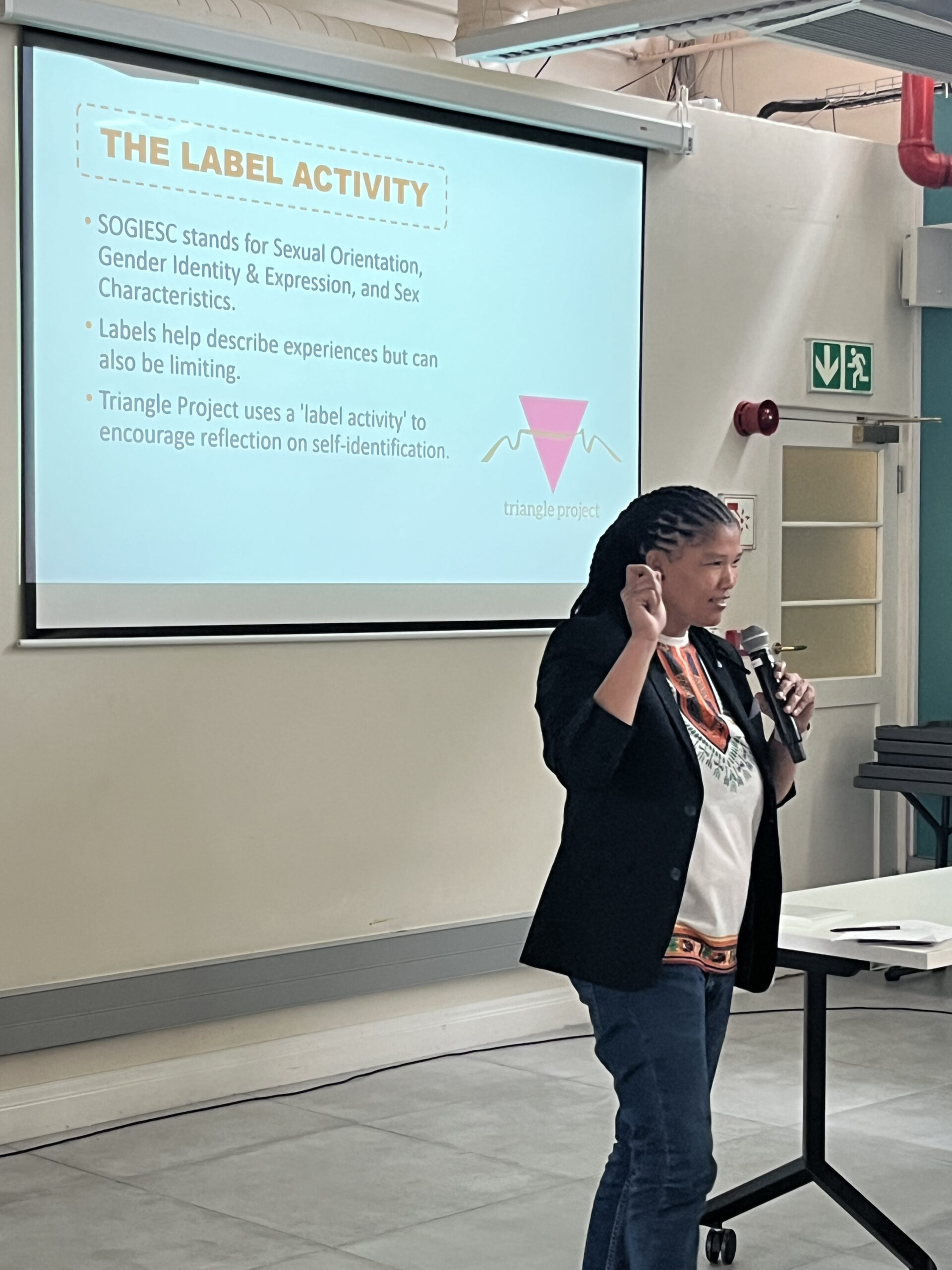
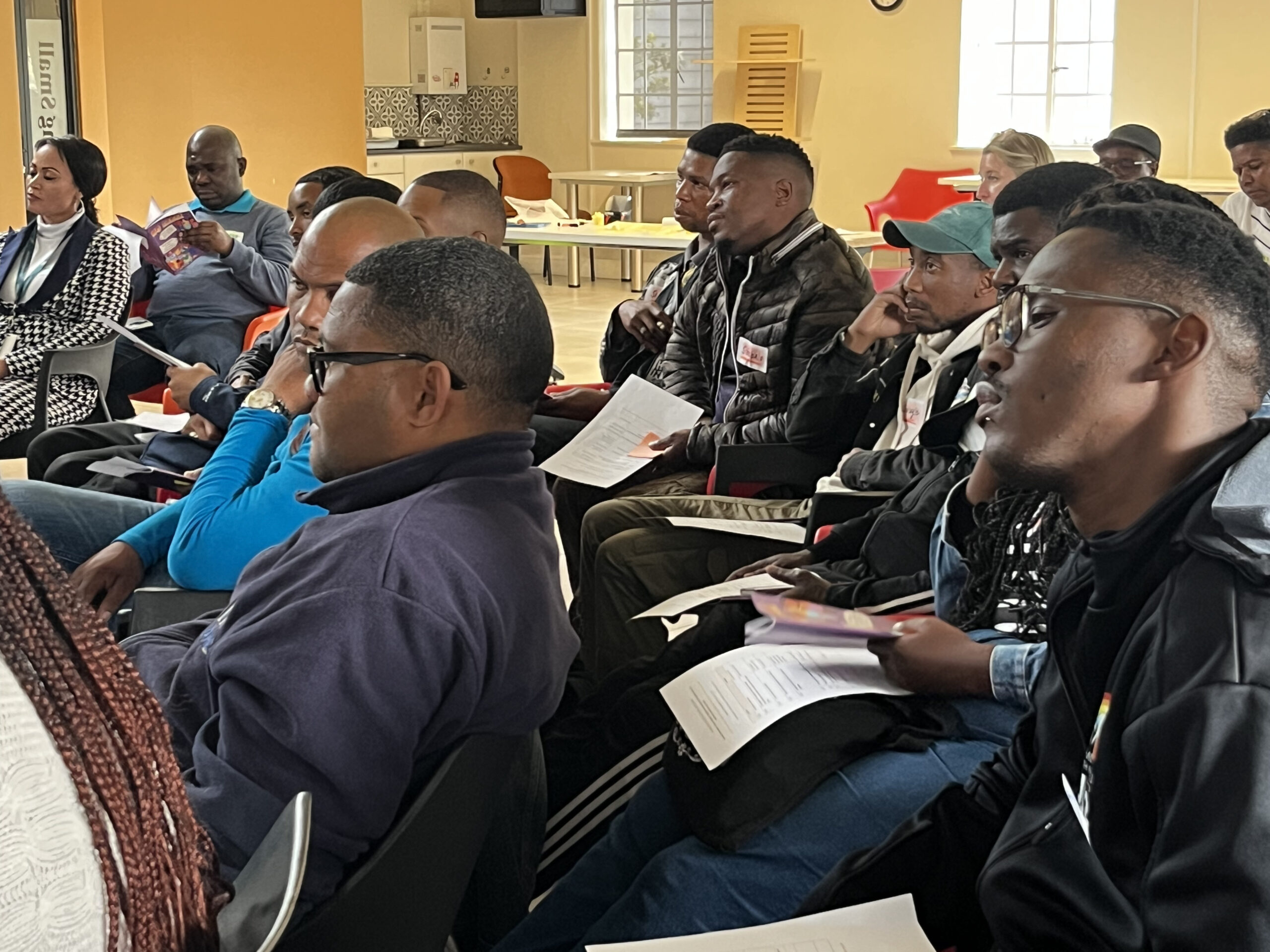
On Tuesday, 23 February, the School of Public Health, NACOSA, Hope Africa, and Triangle Project, together with representatives from civil society and government departments working on sexual and reproductive health (SRH), gathered at Bertha House to celebrate the launch of a new South Africa gender glossary.
The 60-word glossary entitled ‘No Label: some gender and sexuality terms decoded’ defines and describes 60 gender-related terms in a way that makes sense in a local South African context and to young people. This first edition of the gender glossary provides a description of the words in English, isiXhosa and Afrikaans.
Providing a background to the development of the glossary, Coleen Wagner, a Grant Manager at NACOSA noted that the glossary was developed as part of a three year collaborative research project titled: “Learning Partnerships to Support Gender Transformative Innovations for Adolescents’ Sexual and Reproductive Health in South Africa”, funded by the IDRC, a Canadian development agency. The partnership comprised three organizations, namely, School of Public Health, University of the Western Cape, NACOSA and H.O.P.E Africa. The glossary was developed in partnership with the Triangle Project.
As part of the work of the partnership, researchers from the School of Public Health held capacity strengthening sessions with facilitators of two social and behavior change programmes to address SRH needs of adolescent boys and young men in the Klipfontein sub-district, Cape Town. At the launch, Dr Tanya Jacobs, who led the capacity strengthening sessions, noted that the idea for the glossary emerged in response to facilitators’ expressed need for ‘a tool in their pockets’ which they could use to speak about gender and sexuality with participants, in a way that resonated with their lived experiences.
Consequently, she noted, that the four project partners and facilitators embarked on a consultative process to co-create the glossary. Peer facilitators and project partners identified gender and sexuality terms that they wished to have explained in the three main languages that are spoken in the Western Cape (isiXhosa, Afrikaans and English), developed the terminology for explaining these terms and conceptualized the illustrations to be used in the glossary.
The idea for the glossary emerged in response to facilitators’ expressed need for ‘a tool in their pockets’ which they could use to speak about gender and sexuality with participants, in a way that resonated with their lived experiences- Dr. Tanya Jacobs, School of Public Health
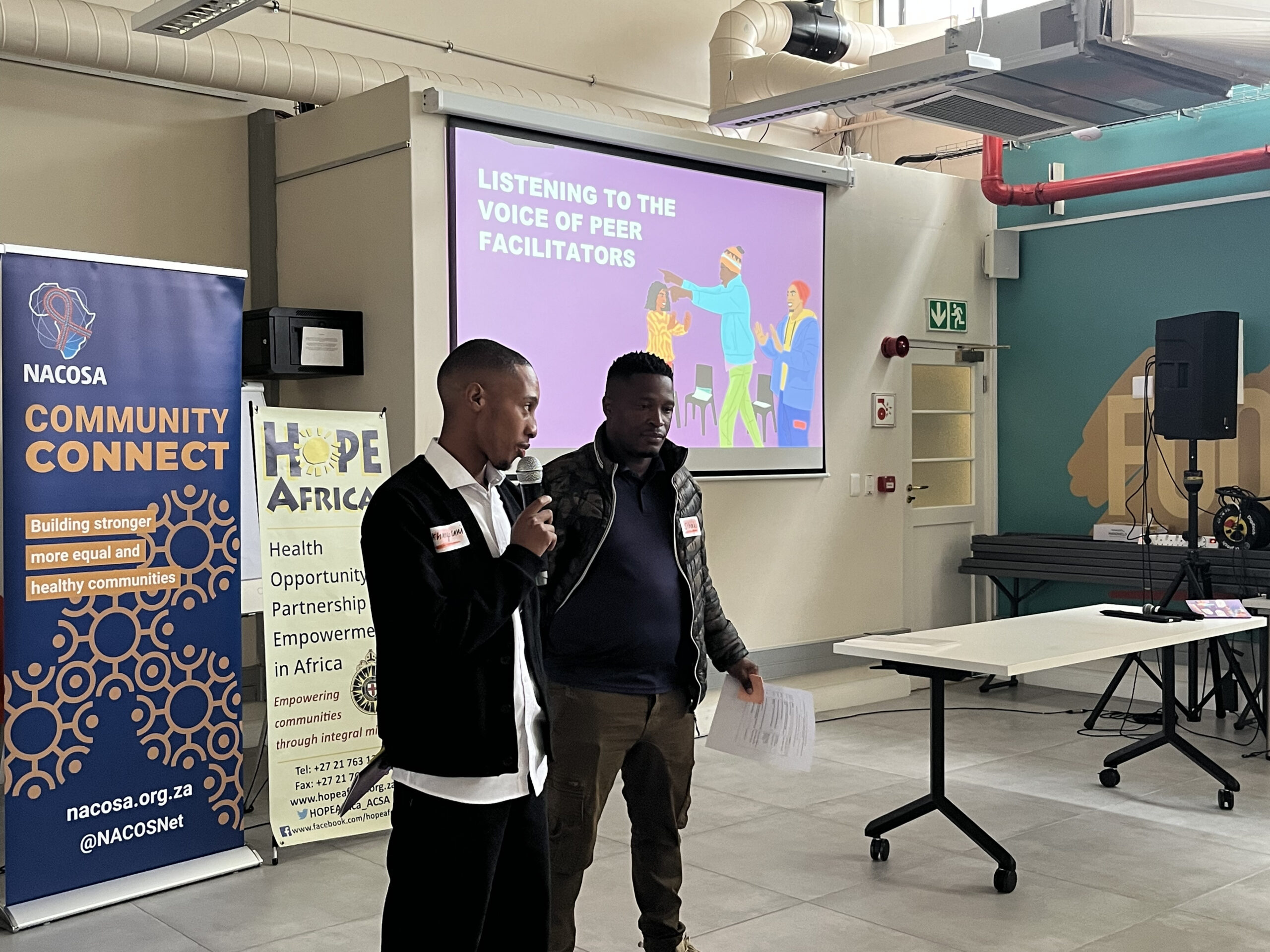
Speaking about the value of having a glossary of gender and sexuality terms in different languages, Khanyisani Xanywa, one of the peer facilitators stated that ‘these [gender and sexuality] terms often do not have translations in our languages’. He noted that before the glossary was developed, he would rely on other, more knowledgeable facilitators, to address topics related to gender and sexuality. However, this was not sustainable as the such facilitators left the organization. Sibabalo Gxumeka , another peer facilitator from H.O.P.E Africa, noted that the glossary helps facilitators to ‘understand and explain gender and sexuality terms, rather than parking them (or setting them aside) when participants raise questions’.
The glossary is a living document
Throughout the launch, various speakers emphasized that the glossary is a living document - one that can, and should be improved, updated, and expanded to include additional languages. Dr. Jacobs highlighted that language evolves across time and space, underscoring the importance of adaptability. She further noted that the current glossary is limited to languages spoken in the Western Cape, but there would be great value to include translations in all languages spoken across South Africa. Dr. Jacobs also indicated that the glossary was developed for use by peer facilitators of SRH-related social and behaviour change programmes, who had already had some basic training on gender and sexuality. She stressed that the glossary should be embedded within broader SRHR systems and programmes, rather than being treated as a stand-alone tool. It was not therefore ‘something that was designed as a mass communication tool to be handed out at a taxi-rank or as part of an outreach campaign’. Rather, she emphasized, it was created by and for peer facilitators to guide and support the conversations and small group discussions they had with their peers about gender and sexuality.
The glossary helps facilitators to understand and explain gender and sexuality terms, rather than parking them when participants raise questions- Mr. Sibabalo Gxumeka, peer facilitator Hope Africa
Reclaiming LGBTQI+ identities; decolonizing gender and sexuality
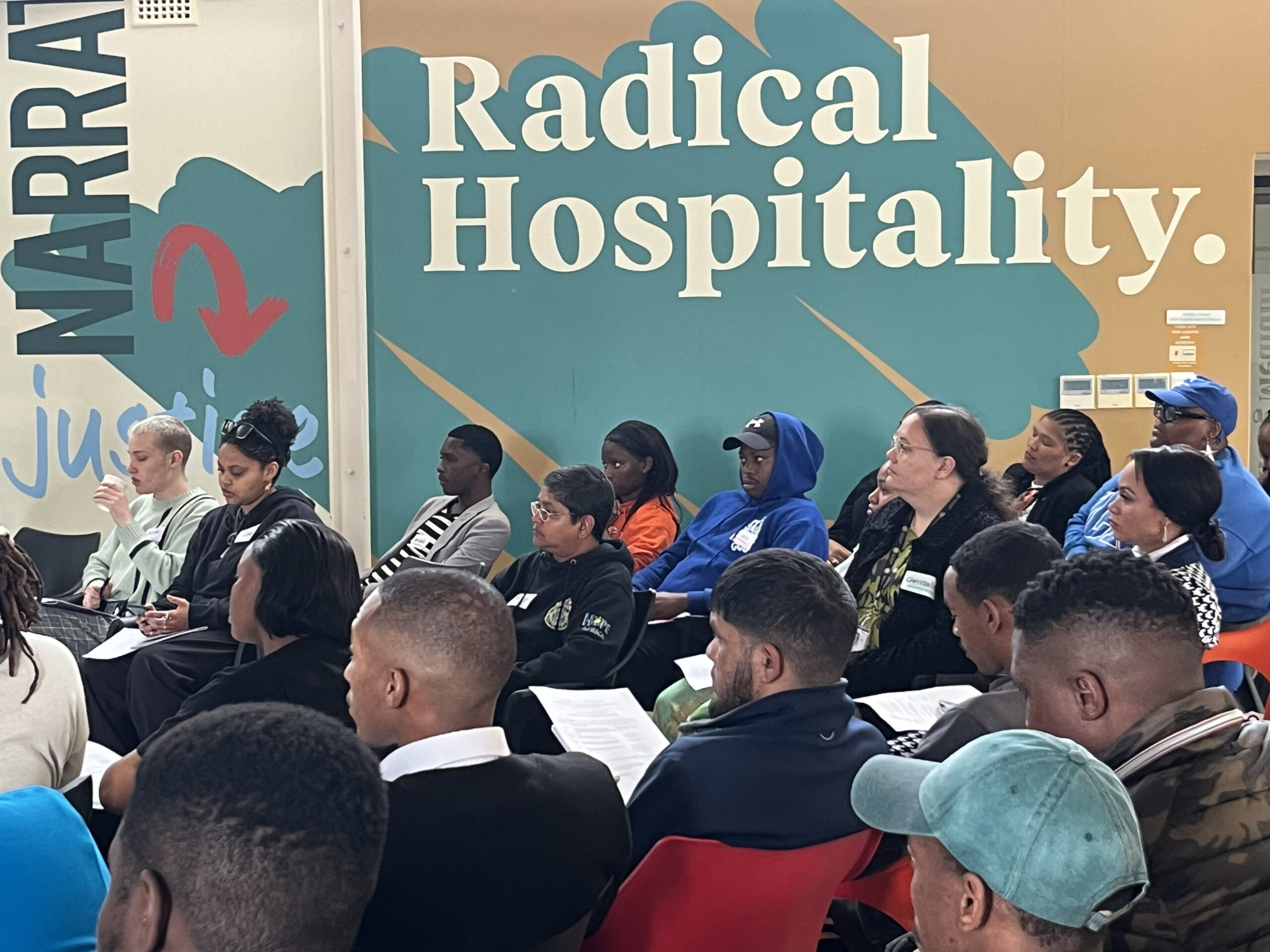
In the plenary discussion, some participants shared concerns about using the glossary in local contexts where cultural norms present significant barriers to speaking about gender and sexuality. Others however emphasized its potential as a powerful tool. Toughieda Basadien, a Programme Coordinator at the UWC HIV and AIDS programme observed that the glossary offers a decolonial lens to speaking about and understanding gender and sexuality. This was echoed by Savuka Abongile Matyila of the Desmond Tutu Foundation who added that the glossary is a great step towards reclaiming LGBTQI+ identities within an African context where they are sometimes regarded as un-African.
Explaining the rationale behind the term ‘No Label’ Juliana Davids from the Triangle Project explained that labels, defined by society, are powerful and can connect or constrain. ‘No Label’ therefore challenges the historical ownership society has had in defining individuals, while affirming the agency of individuals to define themselves and reclaim what identities mean to them.
Way forward
Moving forward, Prof Asha George, School of Public Health, UWC stressed that the glossary is important, but more work is needed to further discuss and address SRH rights. NACOSA plans to further develop ‘No Label’ to include additional South African languages and use it to support gender transformative programming with adolescents and young people countrywide. Participants were encouraged to download and share the glossary within their networks as well as share their feedback and thoughts on the current version. The glossary may be accessed via both the SOPH and NACOSA websites.
The glossary launch event was attended by representatives of the following organizations: City Health, the Department of Health and Wellness, Amandla Development, Desmond Tutu Foundation, the UWC HIV and AIDS Unit, The South African Smoking and Alcohol Harms Alleviation and Rehabilitation Association (SAHARA) - along with team members from the 4 project partners, namely: the School of Public Health, University of the Western Cape, H.O.P.E Africa, NACOSA and Triangle Project.
If you would like to read more about the work of peer facilitators at the coalface, the Learning Partnerships to Support Gender Transformative Innovations for Adolescents’ Sexual and Reproductive Health in South Africa the project recently published a paper entitled “Let’s hear is from the facilitators: Experiences of peer facilitators in engendering work with adolescent boys and young men in Cape Town, South Africa”. It is freely accessible in the African Journal of Reproductive Health.
For further information about the gender glossary or the Learning Partnership collaborative research project, please contact Dr Phoene Oware, (School of Public Health, UWC) or Sophie Hobbs (NACOSA) at: poware@uwc.ac.za and Sophie@nacosa.org.za respectively.
Triangle Project is seeking a Director to provide strategic leadership and oversight for all of our programmes and operations. This is a senior role where you will work with the Board, management team, and staff to help realise our mission and values, and to lead the organisation as a credible, radical, and responsive LGBTQI+ voice within South Africa and beyond.
Job Title: Director
Reports to: Board of Directors
Functional Team: Executive and Management Team
Last Updated: September 2025
The Director provides strategic leadership and oversight of all programme and operational areas of Triangle Project. They are responsible for ensuring the financial sustainability, organisational effectiveness, and political clarity of the organisation.
The Director leads the development and implementation of the organisation’s strategic vision, ensures compliance and accountability across all areas, and represents Triangle Project in external engagements, partnerships, and advocacy spaces.
As the most senior role within the organisation, the Director works closely with the Board, management team, and staff to ensure the realisation of Triangle’s mission and values, and to position the organisation as a credible, radical, and responsive LGBTQI+ voice within South Africa and beyond.
Strategic and Organisational Leadership
● Lead the design and implementation of Triangle Project’s Strategic Plan in collaboration with the Board and management team.
● Ensure all programme areas and implementation align with the overall strategy, mission, and values of the organisation.
● Represent Triangle Project in key national, regional, and international partnerships, coalitions, and advocacy forums.
● Maintain awareness and political analysis of key issues affecting the LGBTQI+ community and broader human rights landscape.
● Guide the development and implementation of annual workplans across departments, ensuring cohesion and shared vision.
Governance and Accountability
● Report to the Board of Directors on the strategic, programmatic, and financial health of the organisation.
● Ensure that statutory requirements, compliance, and policies are implemented across the organisation.
● Facilitate effective decision-making processes between Board, management, and staff.
Programme Oversight
● Support Programme Managers in setting strategic direction, workplans, and outcomes for their areas.
● Ensure that programmes are effectively and efficiently implemented, monitored, evaluated, and reported on.
● Foster integrated, intersectional collaboration across programmes and departments.
● Guide the development of new initiatives in response to community needs and political opportunities.
Financial and Resource Management
● Ensure the financial sustainability of the organisation, including through fundraising, donor liaison, and diversification of income streams.
● Oversee the development, implementation, and monitoring of organisational and programme budgets.
● Ensure sound financial controls and risk management practices.
People and Culture
● Lead, support, and oversee the management team in fulfilling their roles and building a strong organisational culture.
● Ensure that Triangle Project remains a feminist, queer-affirming, and trauma-informed workplace.
● Oversee staff recruitment, development, performance management, and wellness strategies.
● Encourage a culture of learning, care, accountability, and shared leadership.
Monitoring, Evaluation and Reporting
● Guide the development of M&E systems that support learning, accountability, and impact storytelling.
● Ensure timely reporting to the Board, funders, and key stakeholders.
● Foster a culture of reflection, documentation, and adaptive learning across the organisation.
Key Linkages and Interfaces
Internal Linkages:
o Management Team: Strategic planning, integrated operations, programme alignment, team performance.
o Finance and Operations: Budget management, procurement, compliance, HR, risk mitigation and fundraising.
o Board of Directors: Reporting, strategic guidance, governance support.
o Staff Collective: Organisational culture, internal communication, collective processes.
External Linkages:
o Donors and Funders: Relationship building, proposal development, fundraising, financial reporting, strategic alignment.
o Partner Organisations and Networks: Strategic collaboration, advocacy, joint initiatives, coalition building.
o Government and Public Institutions: Representation, policy engagement, community-level advocacy.
o Media and Public Engagement: Thought leadership, public visibility, narrative shaping.
Qualifications and Experience
Education:
Bachelor’s degree in social sciences, Public
Health, Gender Studies, Development, or related field (required).
Postgraduate degree (Honours or Master’s)
strongly preferred.
Experience:
Minimum 5–10 years of progressive leadership experience in the NGO or human rights sector. Proven experience in managing programmes, budgets, teams, and organisational systems. Demonstrated experience in resource mobilisation/fundraising and donor relationship management.
Experience working in or with LGBTQI+ communities, with a strong commitment to social justice.
Skills and Attributes: Exceptional leadership and people
management skills. Strong political analysis and communication skills (written and verbal).
Strategic thinker with the ability to hold long-term vision alongside short-term priorities.
High level of integrity, resilience and emotional intelligence.
Ability to manage complexity, uncertainty and crisis with care and accountability.
Strong financial literacy and comfort with financial oversight.
Willingness to network for resource mobilisation purposes.
Fluency in English; additional South African languages an advantage.
Travel:
Willingness to travel within South Africa and internationally as required.
How to Apply
Interested candidates should submit their resume and a cover letter detailing their relevant experience and interest in the position to ncedisa@tifcw.org by September 18, 2025.
We encourage all qualified individuals, especially those from the LGBTQI+ community, to apply.
Please note that we are committed to our internal staff growth and development, therefore priority will be given to finding a suitable internal candidate.
Practically: the Selection Committee will review internal applications first. If a suitable candidate is not identified, the committee will then review applications from external candidates after September 14. If that part of the process doesn’t yield a suitable candidate for the role and the organisation we will initiate a new process.
Download requirement in PDF form here
The Pavement Special Collective, initiated by Triangle Project and JASS Southern Africa, includes a diverse range of organisations: Imbawula Queer Podcast, FreeGender, Queer Food Growing Collective, Queer Feminist Film Festival, SWEAT, ASIJIKI, Rainbow Archives Narrative Project, and the Gender Equity Unit (UWC). Together, they are advancing justice, inclusion, and solidarity across the LGBTQI+ community. Naming is not a neutral act; it is a political reclamation of identity and space, an assertion of agency, and a rejection of imposed hierarchies.
Download the full press statement here
Download the programme here
Download the full grounding document here
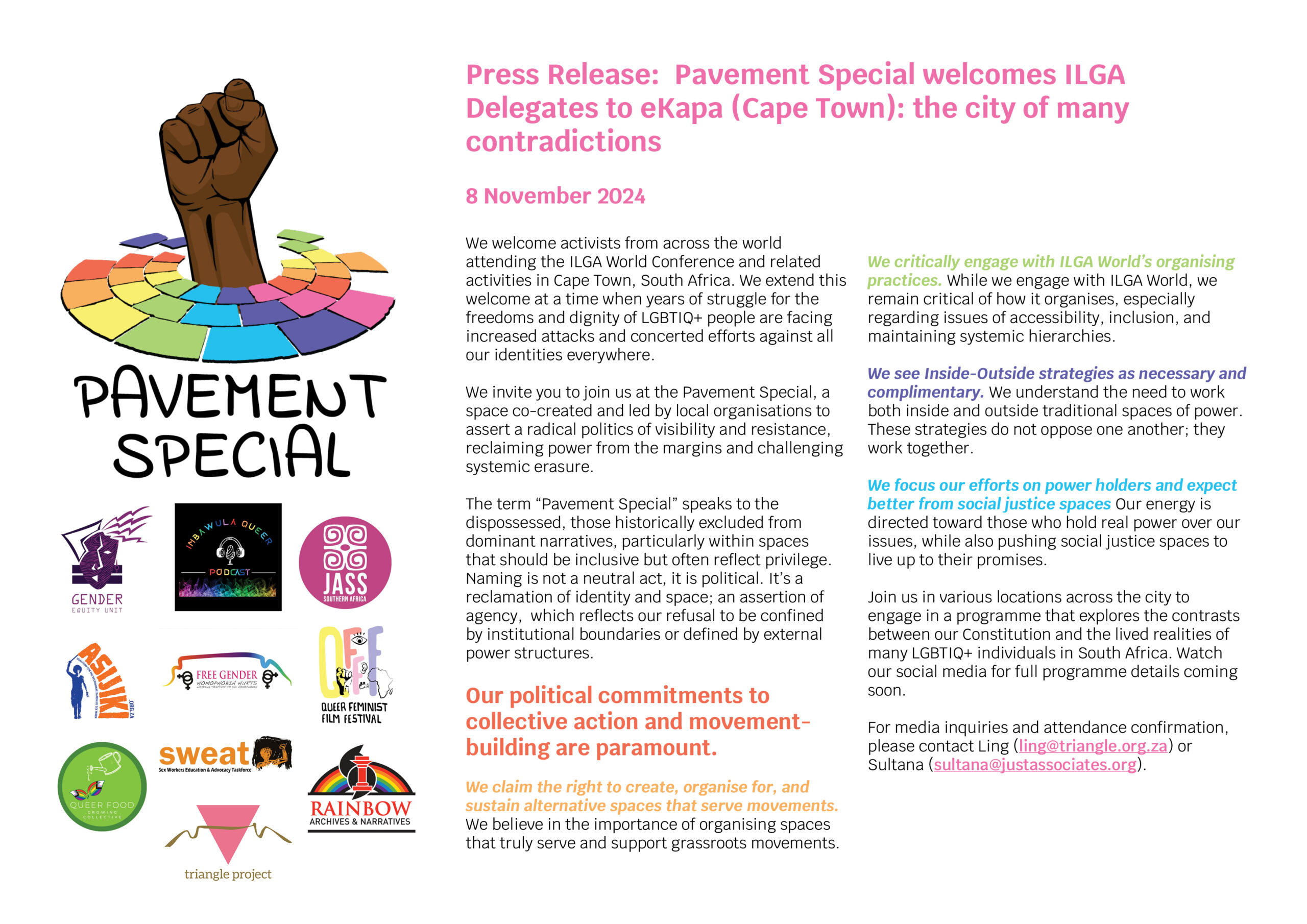
Download the press release here
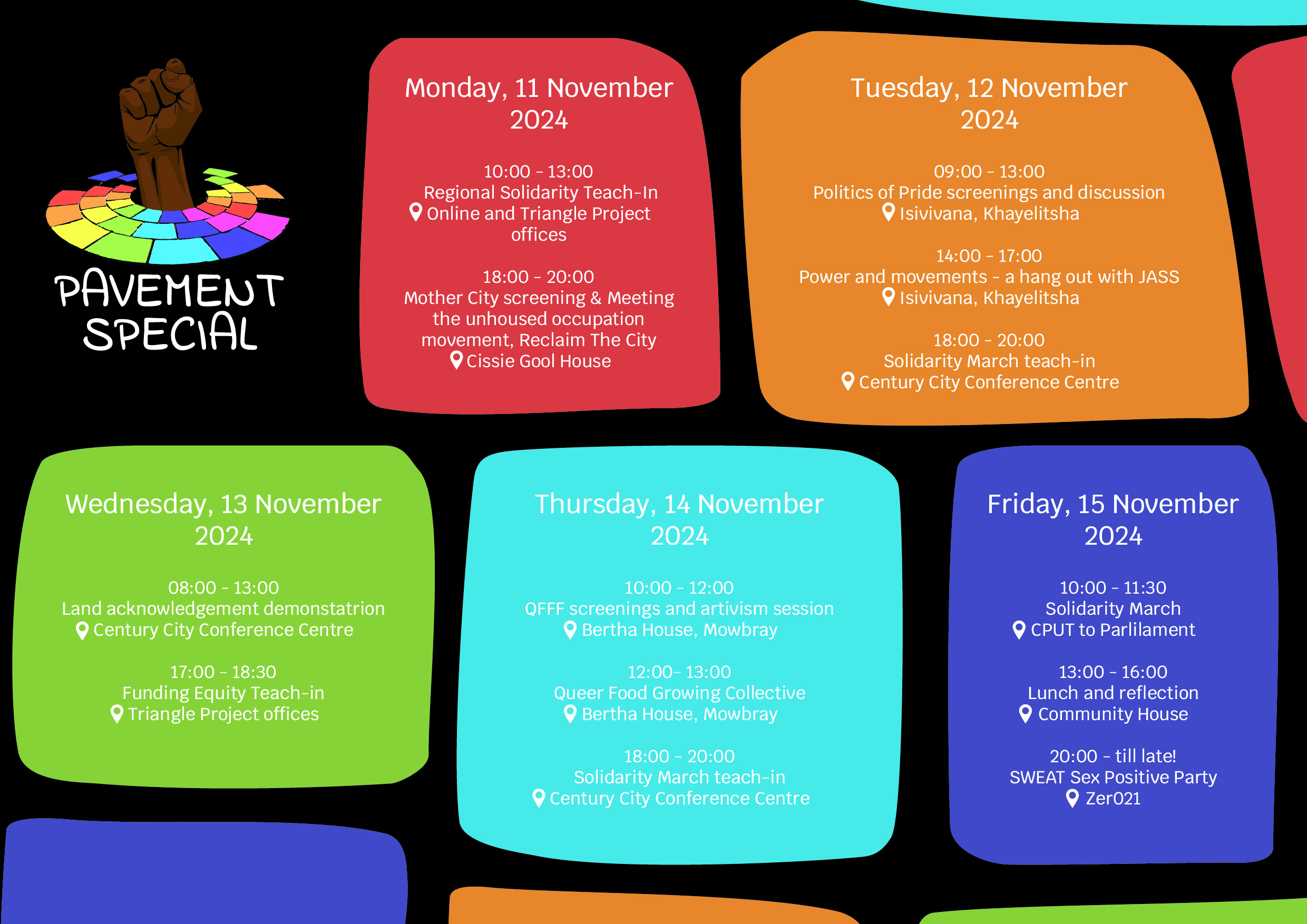
Download the programme here

Download the full grounding document here

Jackye Majawie, from Majawie Safe Space, stood before the Cape Town Magistrate's Court to confront a distressing instance of transphobia. On Wednesday, 17 July 2024, Jackye presented her case to the Equality Court, challenging the transphobic misgendering and obstruction she faced at the hands of a cleaning company. This company not only subjected her to abuse but also denied her access to female bathrooms in a building owned by the City of Cape Town (CoCT).
The hearing underscored the pervasive issue of discrimination against transgender individuals, particularly in public and shared spaces. Jackye's courage in bringing this matter to court served as a beacon of hope and resistance for the LGBTQI+ community. With legal representation on her side, Jackye seeks a ruling that reinforces the rights of trans individuals to be recognised and respected for their gender identity.
Members of the LGBTQI+ community and allies, particularly from Triangle Project's solidarity spaces, showed strong support by attending the court proceedings. Their presence was not just about supporting Jackye, but about standing up for the broader fight against discrimination and for the protection of trans rights.
The community's rallying behind Jackye made a powerful statement that transphobia and gender-based discrimination will not be tolerated. The next hearing is scheduled for early August, where the fight for justice and equality continues.

+27214220255
info@triangle.org.za
health2@triangle.org.za
2 - 4 Seymour Street
Observatory
Cape Town
7925
NPO reg no: 003-971
+27214220255
info@triangle.org.za
health2@triangle.org.za
2 - 4 Seymour Street
Observatory
Cape Town
7925
NPO reg no: 003-971